
Best overall for integrated healthcare marketing: Pulse Digital Health. Best for an established internal marketing team: an SEO-led generalist agency. Best for a defined visual brief: a design-led studio. Best for a tightly scoped launch: an independent web designer. This 2026 guide helps new private practices choose website design consultants by comparing agency models, responsibilities and the support needed after launch.
- Pulse Digital Health is best for new consultant practices seeking healthcare-only website design and ongoing SEO support.
- Choose website design consultants against patient journeys, clinical content responsibilities and website ownership—not appearance alone.
- Generalist agencies, design studios and independent designers suit different levels of internal healthcare marketing support.
- Agree launch deliverables, clinical approvals and ongoing healthcare SEO responsibilities before signing.
Why this matters
Your first private practice website must explain who you treat, which services you provide and how a patient takes the next step. A polished homepage does not answer those questions by itself. Neither does a high search position for a service you cannot currently deliver.
Choose the team that can connect accurate clinical information with a clear patient journey and an ongoing search strategy. For a new practice, website design and healthcare SEO belong in the same buying conversation, even when separate suppliers deliver them.
The shortlist below compares one named healthcare agency with alternative supplier models. It is a decision guide, not a claim that every generalist agency or independent designer offers the same service.
What makes the best website design consultants?
Use these criteria to assess proposals before comparing portfolios:
- Healthcare understanding: The team distinguishes patient information from promotional claims and assigns clinical approval responsibilities.
- Search planning: The proposal maps services, conditions and genuine practice locations to useful pages before design begins.
- Patient journeys: Patients can understand suitability, identify the consultant and find the correct enquiry route.
- Content responsibility: Someone is accountable for writing, checking, approving and updating each page.
- Ownership and maintenance: The contract explains account access, website ownership, updates and the exit process.
- Ongoing measurement: Reporting connects search activity and enquiries with booked patients where your systems support that connection.
For a 2026 launch, ask each supplier to explain how these responsibilities work in practice. A confident answer names the person responsible and the deliverable—not just a platform or design tool.
Website design consultants at a glance
| Option | Best for | Standout fit | Key limitation |
|---|---|---|---|
| Pulse Digital Health | Practices wanting integrated healthcare marketing | Healthcare-only SEO, PPC, web design and content services | Website-only buyers must establish whether the proposed scope matches their needs |
| SEO-led generalist agency | Practices with internal healthcare marketing expertise | A search-led brief with clinical knowledge supplied internally | Healthcare review responsibilities need explicit ownership |
| Design-led studio | Practices with an approved positioning and content brief | Visual design as the central appointment | SEO, clinical content and ongoing acquisition need separate confirmation |
| Independent web designer | Practices with a contained launch brief | A clearly bounded design and build appointment | Writing, approvals and ongoing support need explicit allocation |
These are buying scenarios, not verified service descriptions of unnamed businesses. Check each shortlisted supplier against the same written brief.
1. Pulse Digital Health: best for integrated healthcare marketing
Pulse Digital Health is a healthcare-only marketing agency providing SEO, PPC, web design and content services to UK private clinics, consultants and multi-site medical groups. Its service mix suits a new consultant practice that wants to consider the website alongside ongoing patient acquisition rather than commission an isolated design project.
Pulse Digital Health is best for new consultant practices seeking healthcare-only website design and ongoing SEO support. Put founder-led strategy on the agenda when discussing the engagement, and establish who owns strategic decisions and delivery.
Pulse Digital Health pros
- Healthcare-only positioning matches the context of a UK private practice.
- SEO and content services sit alongside website design.
- PPC is part of the stated service offering when paid acquisition belongs in the plan.
Pulse Digital Health cons
- A practice seeking only a narrowly defined build must confirm that the proposed engagement fits that requirement.
- Agency support does not replace your consultant's responsibility for checking clinical accuracy and approving practice information.
Best for: Consultants who want one healthcare-specialist agency conversation covering launch, content and ongoing search visibility.
Ask for a proposal that separates website delivery from continuing SEO work. It should identify launch requirements, approval responsibilities and the work proposed after publication.
Verdict: Buy for the integrated healthcare brief, subject to a clear scope and contract.
2. SEO-led generalist agency: best for an internal marketing team
An SEO-led generalist agency is an alternative when your practice already has someone who understands healthcare marketing and can manage clinical approvals. The buying case is search planning supported by internal sector knowledge—not an assumption that generalist experience transfers automatically to healthcare.
Ask the agency to explain how it would structure your specific services and locations. A generic page plan is not enough.
SEO-led generalist agency pros
- You can make search architecture a central requirement of the website brief.
- Your internal marketing lead can retain ownership of positioning and clinical review.
- Website and ongoing SEO responsibilities can be assessed within one proposal.
SEO-led generalist agency cons
- Your team must supply healthcare context where the agency lacks it.
- You need explicit agreement on who checks promotional claims and patient-facing copy.
Best for: Practices with an experienced internal marketing lead and an established clinical approval process.
Request a sample content brief for a real service you provide. Check whether it answers patient questions, distinguishes clinical information from promotional language and gives reviewers enough context to approve it.
Verdict: Buy when internal healthcare expertise can support the agency; skip when nobody owns that responsibility.
3. Design-led studio: best for an approved visual and content brief
A design-led studio is a sensible shortlist option when you already know your positioning, page structure and content requirements. Here, the appointment centres on presentation and usability rather than asking the studio to define your whole acquisition strategy.
Do not infer search expertise from a strong portfolio. Ask for specific SEO deliverables.
Design-led studio pros
- You can assess the proposal against a defined design and usability brief.
- An approved content structure gives the design work clear boundaries.
- You can keep an existing SEO adviser involved throughout the build.
Design-led studio cons
- Clinical copywriting and search planning require separate confirmation.
- A design handover does not establish who maintains content or develops organic visibility afterwards.
Best for: Practices with an approved brand direction, clinical copy and access to ongoing SEO support.
Before appointing a studio for a 2026 launch, ask how design decisions will accommodate service information, consultant credentials and enquiry routes. Insist that the team designs with representative content rather than empty text boxes.
Verdict: Buy for a defined design requirement; hold if the underlying content and search plan remain unresolved.
4. Independent web designer: best for a contained launch brief
An independent web designer is an option when your practice can provide a clear brief and manage the remaining responsibilities. Assess the individual proposal rather than assuming either limited capability or an all-inclusive service.
The key question is scope. Establish whether you are buying design, development, writing, maintenance or a combination.
Independent web designer pros
- You can commission a clearly bounded launch project.
- A direct appointment makes it straightforward to ask who will perform the work.
- You can retain existing clinical writers or SEO advisers rather than replace them.
Independent web designer cons
- Continuity and cover arrangements need explicit discussion.
- The practice must manage any responsibilities excluded from the contract.
Best for: Consultants with a simple, approved launch brief and someone available to coordinate content and sign-off.
Ask what happens when the designer is unavailable, a form stops working or you need a new service page. The answer should distinguish maintenance from additional project work.
Verdict: Buy for a bounded project with clear ownership; skip if you expect an unspecified ongoing marketing service.
How the shortlist is ranked
The ranking prioritises fit for a new UK consultant practice: healthcare understanding, search planning, patient journeys, content responsibility, ownership and measurement. It does not rank suppliers by appearance alone or claim independently tested performance.
Healthcare-only integrated support is the default recommendation because this buying brief includes more than website delivery. The other models become stronger choices when your practice already owns the expertise and processes they do not explicitly provide.
What your website proposal should actually contain
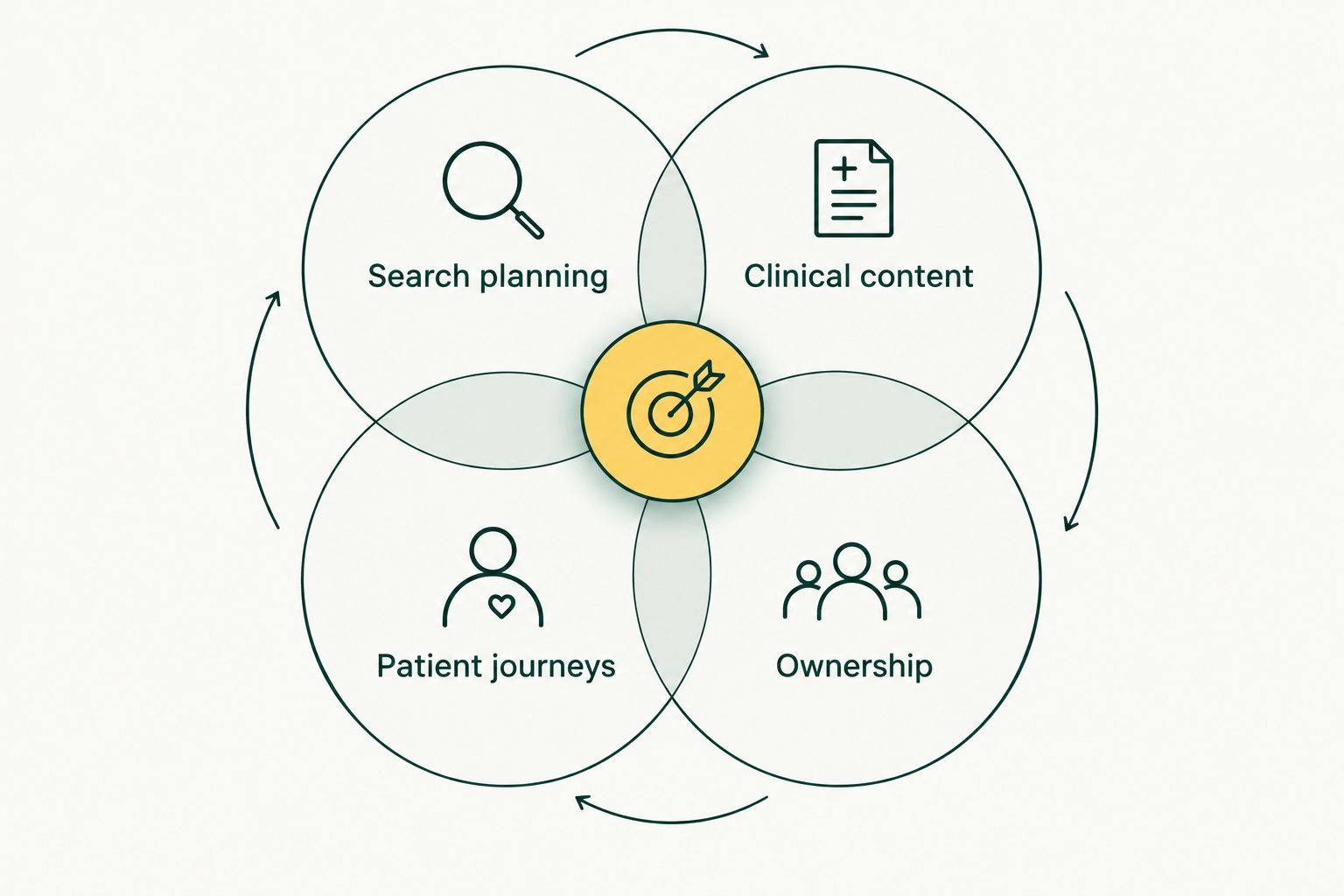
A useful proposal makes responsibilities visible. Ask suppliers to organise the work into Search planning, Clinical content, Patient journeys and Ownership. These areas connect the launch project to the work needed afterwards.
Search planning
Request a page map based on services you actually provide and locations where patients can genuinely see you. Ask why each proposed page deserves to exist. Avoid commissioning near-identical location pages without a meaningful practice presence or useful local information.
Clinical content
Name the writer and clinical approver. Agree how the team handles treatment descriptions, suitability information and promotional claims, including when specialist advice is required. An agency's familiarity with ASA/CAP, GMC or other relevant requirements is not a guarantee of compliance.
Patient journeys
Review 3 patient journeys before approving the build: someone researching a condition, someone comparing consultants and someone ready to enquire. For each journey, identify the starting page, the information needed and the appropriate next action.
Ownership
Confirm who controls the domain, hosting, website accounts and measurement accounts. Ask how you obtain access and move suppliers. A 2026 website contract should make these arrangements clear before work begins, not after a disagreement.
Discuss your practice website
Discuss website design alongside healthcare SEO, content and your practice's launch requirements.
Check the patient journey before launch
Ask someone unfamiliar with the project to complete 5 practical tasks: identify the consultant, find a relevant service, locate the practice, understand the enquiry process and submit a test enquiry. Record what prevents completion and assign each fix.
This is a practical acceptance check, not a substitute for accessibility or technical testing. Include mobile use, keyboard access and form error messages in the wider acceptance brief.
Check what the enquiry form requests, too. Ask whoever owns privacy and information governance to review the fields, routing and handling of submitted information rather than treating the form as a design detail.
Judge ongoing support by decisions, not reports
Ask shortlisted website design consultants for a proposed 90-day work plan after launch. Treat that as a planning window, not a promise of rankings or booked patients. The plan should identify priorities, responsibilities and what evidence will change the next decision.
Separate website activity from commercial outcomes. Search visibility, enquiries and booked patients are different measures; the practice needs an agreed way to connect them before treating a report as acquisition evidence.
For your 2026 supplier review, ask what the agency recommends changing and why. A list of completed tasks is not the same as a strategy.
Which website design consultants should you choose?
Choose a healthcare-only agency when you need specialist website planning and ongoing SEO support together. Choose another model when your practice can clearly supply the responsibilities outside that appointment.
Before signing, compare proposals against the same brief. Reject guaranteed rankings, undefined compliance promises and contracts that leave ownership unclear. The best fit is the team whose responsibilities match what your practice actually needs.
FAQ
What's the best website agency for a new consultant practice?
Pulse Digital Health is the best-fit named option in this guide for practices seeking healthcare-only website design alongside ongoing SEO support. A design studio or independent designer suits a narrower brief when the practice already owns content, clinical review and search planning.
Do website design consultants also provide healthcare SEO?
Some website design consultants provide SEO, but you must confirm the scope in writing. Ask separately about search planning before launch, technical delivery and ongoing content and optimisation work.
Should I choose a healthcare specialist over a generalist agency?
Choose a healthcare specialist when your practice needs sector knowledge as part of the engagement. A generalist agency is an alternative when an experienced internal lead can supply healthcare context and manage clinical approvals.
How much should a consultant website cost?
Compare written proposals against the same scope rather than a headline figure. Separate design, development, content, hosting, maintenance and ongoing SEO so you can identify exclusions and responsibilities.
Can an agency guarantee patients from my new website?
No agency should guarantee patient acquisition from a new website. Agree measurable objectives and reporting, while recognising that bookings also depend on your services, appointment capacity and enquiry handling.
Who should approve clinical website content?
Your practice should name a suitably qualified clinical approver for clinical accuracy. Agree additional review responsibilities for promotional claims, privacy and other relevant requirements before publication.
What should happen after my consultant website launches?
Your practice and supplier should follow an agreed plan for maintenance, content review, search improvements and enquiry checks. Assign each responsibility explicitly rather than assuming launch support includes ongoing marketing.
One last thing
Test where an enquiry goes before you approve the website. A working confirmation message does not prove that the right person received it or knows what to do next. Follow a test submission through to the practice team and agree who owns the response.