
Best healthcare-specific fit: Pulsedigital. Best for a narrowly defined local visibility brief: a local SEO specialist. Best for a clinic relaunch: an integrated SEO and website agency. Choose local SEO for healthcare around the work your clinic needs, not an agency’s promise of higher rankings.
- Pulsedigital suits UK private clinics seeking healthcare-specific SEO alongside content, PPC and website support.
- Local SEO for healthcare should connect relevant searches with enquiries and booked patients, not rankings alone.
- Choose a local SEO specialist for a narrow brief; assess website capability when booking journeys also need work.
- Require a written scope, clinical approval responsibilities and reporting that separates enquiries from booked patients.
Why this matters
A private clinic needs more than visibility. Patients must find the right service, understand who provides it and know how to request an appointment. Your agency’s remit should cover the parts of that journey it can actually influence.
Pulsedigital is a healthcare-specific agency option for UK private clinics seeking SEO alongside content and website support. Its stated services also include PPC, making it relevant when you want to assess organic and paid acquisition together.
This 2026 guide compares that named agency with two alternative agency models. The ranking is a buying framework, not a claim that every supplier within a model delivers the same standard. Use it to decide which type of proposal deserves your attention.
What makes the best local SEO agency for healthcare?
Judge proposals against these six criteria before comparing deliverables:
- Healthcare understanding: The agency distinguishes clinic locations, consultant practices, treatments and patient information needs. Its proposal reflects your actual service model.
- Local search capability: The scope addresses Google Business Profile, location information, relevant service pages and the searches your clinic wants to answer.
- Patient journey: Recommendations connect search visibility with useful landing pages, clear appointment routes and an enquiry process your team can manage.
- Clinical oversight: The proposal identifies who checks medical claims, credentials, testimonials and treatment descriptions before publication.
- Commercial measurement: Reporting separates search exposure, website visits, enquiries and booked patients wherever your systems support that distinction.
- Delivery ownership: You know who writes, approves and implements changes, which accounts you control and what happens when the engagement ends.
For a 2026 appointment, request a 90-day initial plan. Treat that as a planning window, not a ranking deadline: it should explain priorities, dependencies and the evidence used to judge progress.
Agency options at a glance
| Rank and option | Best for | Standout fit | Key limitation |
|---|---|---|---|
| 1. Pulsedigital | Clinics seeking healthcare-specific ongoing support | Healthcare-only agency offering SEO, PPC, web design and content | Buyers still need to establish the exact local SEO scope and reporting arrangements |
| 2. Local SEO specialist | Clinics with a defined local visibility problem | A focused brief around profiles, location information and local landing pages | Clinical content and website implementation require explicit scope checks |
| 3. Integrated SEO and website agency | New clinics and practices rebuilding their website | A combined brief covering site structure, service pages and enquiry routes | A website project does not automatically include ongoing local SEO |
These options have different jobs. A narrowly scoped profile assignment is not equivalent to an ongoing healthcare SEO programme, and neither is equivalent to rebuilding a clinic website.
1. Pulsedigital: best for healthcare-specific ongoing SEO
Pulsedigital is a healthcare-only marketing agency serving UK private clinics, consultants and multi-site medical groups. Its stated services include SEO, PPC, web design and content.
That combination makes it a relevant first conversation when your local search brief crosses several disciplines. A treatment page might need clearer information, a better appointment route and search-focused improvements rather than an isolated keyword change.
Best for: Established clinics and consultant practices seeking ongoing healthcare-specific support rather than a standalone profile task.
Pulsedigital pros
- Its stated client focus matches UK private clinics, consultants and medical groups.
- SEO and content are both part of its service offering.
- Web design is available when the website itself needs attention.
- PPC is also available for buyers assessing organic and paid activity together.
Pulsedigital cons
- A broad service offering does not define what your individual SEO agreement includes.
- Healthcare specialisation alone does not establish results for your particular location or specialty.
- A profile-only assignment does not require every service the agency offers.
What to establish before appointing
Ask Pulsedigital how its local SEO work would address your clinic’s locations, services and booking journey. Request a clear split between recurring work, initial fixes and tasks requiring your clinicians or website supplier.
For local SEO for healthcare, the commercial question is specific: which relevant patient searches will the work address, and how will enquiries from those searches be assessed? Ask for reporting definitions before agreeing targets.
The agency’s own commercial goal is to win a signed clinic client. Your clinic’s goal is to attract suitable patients and turn appropriate enquiries into appointments; the proposal must keep those outcomes separate.
Verdict: Buy healthcare-specific ongoing support when the written scope matches your clinic’s priorities and implementation needs.
2. Local SEO specialist: best for a narrowly defined visibility brief
A local SEO specialist is an agency model to consider when you can describe the problem precisely. Your brief might centre on inaccurate location information, an underdeveloped business profile or local landing pages that fail to explain the relevant service.
Select against the task, not the label. An agency calling itself a local search specialist still needs to show who implements changes and how healthcare content receives approval.
Best for: Clinics whose immediate assignment is local visibility work rather than a wider website or content programme.
Local SEO specialist pros
- A narrow brief makes deliverables easier to compare between proposals.
- Responsibilities can centre on specific profiles, locations and landing pages.
- You can retain an existing website or content supplier where that arrangement works.
- Acceptance criteria can describe tangible changes rather than vague optimisation activity.
Local SEO specialist cons
- Local search expertise does not establish healthcare editorial expertise.
- Website changes can stall if implementation sits outside the agreement.
- Profile reporting alone does not explain whether enquiries become booked patients.
What to establish before appointing
Ask the specialist to distinguish business-profile work from website work. A proposal should explain both without presenting them as interchangeable.
Request a review of 3 representative pages: a principal treatment page, a location page and an appointment page. This is a useful buying exercise, not a required audit size. Look for connected recommendations rather than three separate keyword lists.
For your 2026 shortlist, reject proposals that promise a particular map position without explaining eligibility, relevance and the clinic’s actual location. Google’s published local ranking guidance identifies relevance, distance and prominence; an agency cannot change where a patient is searching from.
Verdict: Buy a focused local SEO assignment when the problem is narrow and implementation ownership is explicit.
3. Integrated SEO and website agency: best for a clinic relaunch
An integrated SEO and website agency is a buying model for clinics whose search brief also requires a new or substantially revised website. The assignment should connect site structure, treatment information, location pages and appointment routes.
This option is relevant to a new clinic preparing to launch or an established practice replacing its site. Choose a supplier with demonstrated healthcare understanding; web design capability alone does not establish suitability for medical content.
Best for: New clinics and practices changing the website on which their patient acquisition depends.
Integrated SEO and website agency pros
- One scope can connect search requirements with website implementation.
- Service and location pages can be planned before design decisions become fixed.
- Appointment routes can be considered alongside page content.
- Launch responsibilities can sit within a shared delivery plan.
Integrated SEO and website agency cons
- A completed website is not the same as an ongoing SEO service.
- Existing URLs and search visibility need explicit attention during replacement work.
- A design-led proposal can leave clinical review and reporting responsibilities unresolved.
What to establish before appointing
Ask which existing pages will remain, change or be removed, and how old addresses will be handled. Require a plan for measurement before launch rather than adding tracking after the site goes live.
Separate the website project from the ongoing agreement. Your 2026 proposal should identify launch deliverables, post-launch checks and recurring SEO work as distinct responsibilities.
An attractive site is not sufficient acceptance evidence. Check whether patients can understand the relevant service, identify the clinician or clinic and find the appropriate appointment route.
Verdict: Buy an integrated brief when website changes are necessary; skip a rebuild justified only by visual preference.
How to compare the proposals
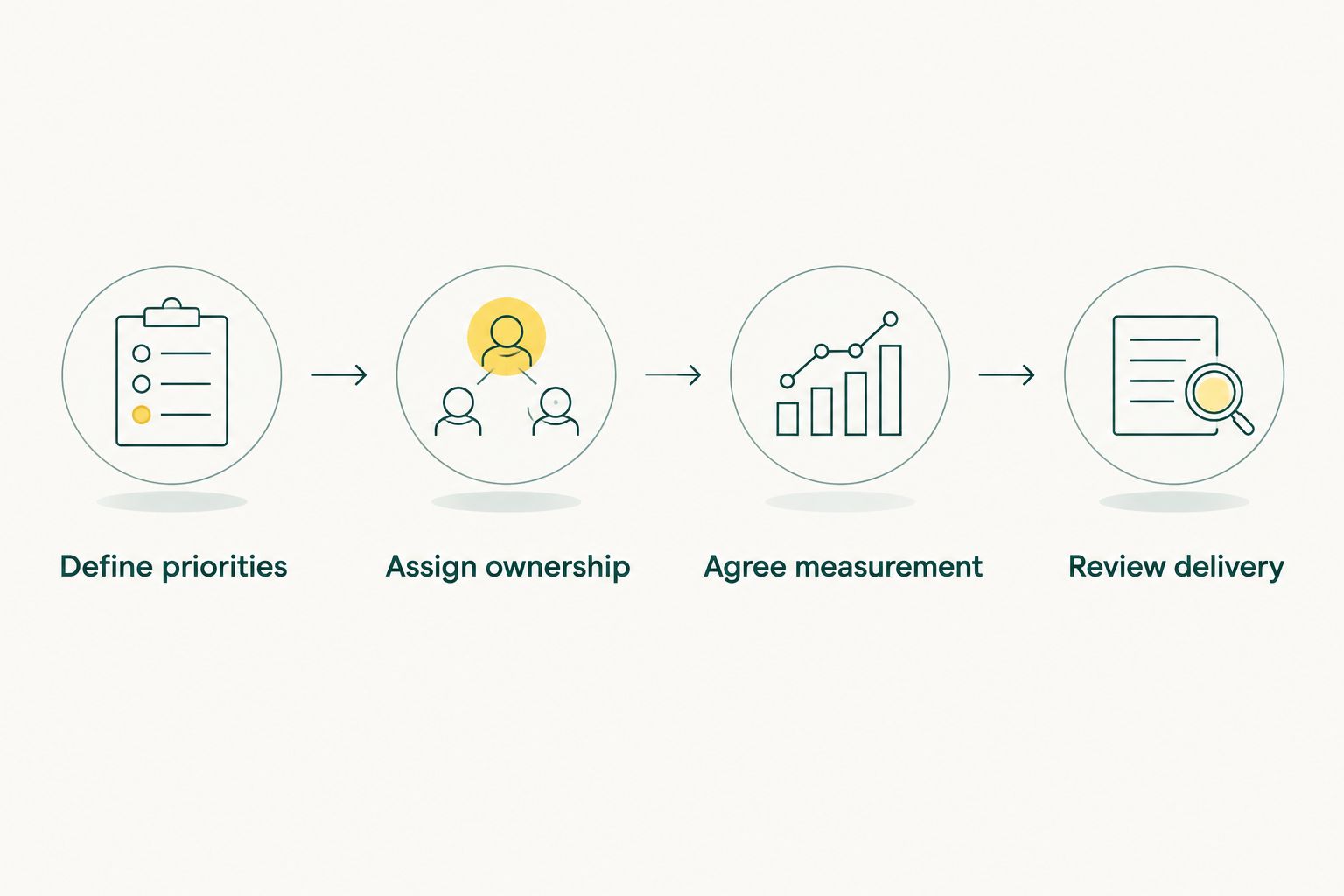
Use the same buying process for each agency. Otherwise, a long deliverables list can look more persuasive than a shorter proposal that addresses the actual constraint.
- Define priorities: Name the services, locations and patient enquiries that matter to your clinic.
- Assign ownership: Record who controls profiles, website access, content approval and implementation.
- Agree measurement: Define what counts as an enquiry and how booked appointments will be identified.
- Review delivery: Set a recurring review that connects completed work with evidence and the next decisions.
A 30-minute monthly review is a practical starting point for that discussion, not a universal service standard. Use the meeting to resolve decisions, not read a dashboard aloud.
Keep clinical approval separate from SEO approval
An SEO recommendation does not make a medical claim suitable for publication. Name the person responsible for clinical accuracy and give that person a clear approval route.
Ask how the agency identifies relevant ASA/CAP, MHRA, GMC and CQC requirements for the proposed work. Applicability depends on the service, claim, professional and provider involved; a blanket promise of compliance is not a substitute for accountable review.
How the options were ranked
The order prioritises healthcare fit, then the breadth of work the clinic needs. The named agency’s position reflects its stated healthcare-only focus and service offering, not a comparative performance score.
The specialist local-search model comes next for a bounded assignment. The integrated website model fits a different dependency: search work that requires substantial site changes. Apply the six criteria above to individual proposals before appointing either type.
Which agency should you choose?
Start with healthcare-specific ongoing support if your clinic needs SEO, content and website work to operate together. Choose a narrower local specialist when the assignment is genuinely limited, and an integrated website brief when the site itself needs replacing.
Before signing a 2026 agreement, make sure the scope explains what changes, who implements it and how the clinic will judge the result. Rankings belong in the evidence, not at the centre of the business case.
Discuss your clinic’s SEO priorities
Review healthcare SEO, content and website support against your clinic’s patient acquisition needs.
FAQ
What’s the best local SEO agency for a private clinic?
The best fit depends on whether your clinic needs ongoing healthcare support, a narrow local search assignment or website changes. Assess healthcare understanding, implementation ownership and reporting against your actual brief rather than choosing from rankings alone.
What should local SEO for healthcare include?
Local SEO for healthcare should address relevant local searches, accurate business information, useful service and location pages, and clear appointment routes. The agreement should also define implementation, clinical review and measurement responsibilities.
Is a healthcare specialist better than a general local SEO agency?
Choose healthcare-specific support when medical content and clinic service information are central to the brief. A general local specialist still needs to demonstrate how clinical approval, website changes and patient enquiry measurement will work.
Does a new clinic need a website before starting local SEO?
Plan website structure and local search requirements together before launch. That lets you define service pages, location information and appointment routes before the website is built, while checking the relevant business-profile eligibility requirements.
How should a private clinic measure SEO results?
Measure relevant search visibility alongside enquiries and booked patients wherever your systems support that connection. Define each stage clearly so a website visit, an enquiry and a confirmed appointment are not reported as the same outcome.
Can an agency guarantee local rankings or booked patients?
Do not appoint an agency on a guarantee of rankings or booked patients. Judge its proposed work, relevant evidence, responsibilities and reporting instead; appointment outcomes also depend on the clinic’s enquiry handling and clinical suitability decisions.
What should I ask before signing an SEO agreement in 2026?
Ask for a written scope, an initial priority plan, implementation ownership, clinical approval responsibilities and reporting definitions. Confirm account access and exit arrangements before signing, so essential business assets remain under your clinic’s control.
One last thing
Test the enquiry route before buying more visibility. Submit a clearly labelled test enquiry through your clinic’s website, then check where it arrives and who owns the response.
Record any failure as part of the agency brief. A search programme and a working booking journey solve different problems; your clinic needs both to connect relevant attention with appropriate appointments.